

Blog · Home & Business Rewiring
What Is Part P Electrical, and When Does It Apply?
Key Takeaways
- Part P is technically an England and Wales building regulation, but Scotland has its own equivalent notifiable work rules
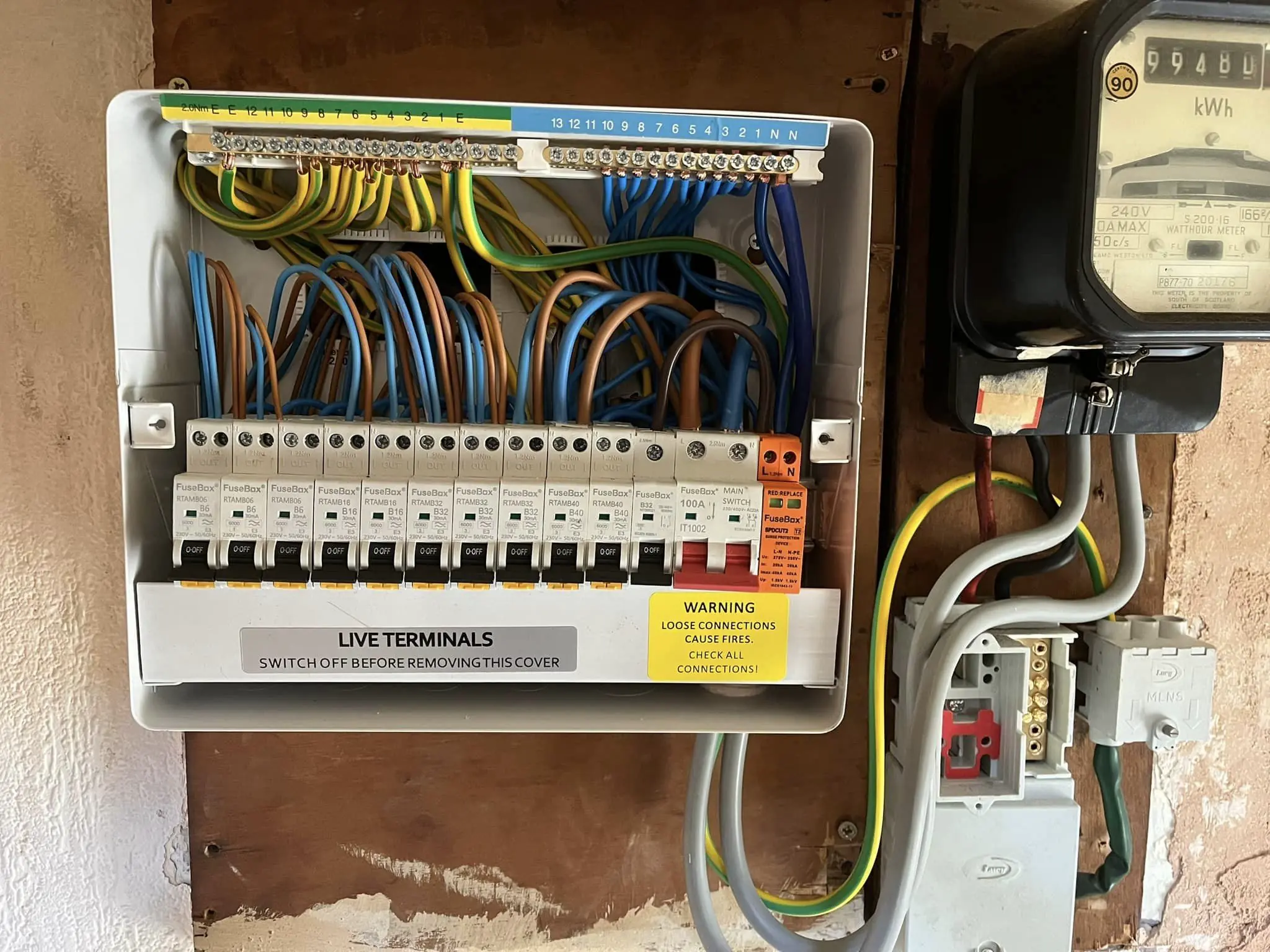
- Notifiable electrical work includes new circuits, consumer unit replacements, and work in bathrooms or other special locations
- A registered electrician can self-certify notifiable work, avoiding a separate council application
- Not all electrical work is notifiable — many repairs and additions to existing circuits fall outside these rules
Part P comes up a lot in conversations about electrical work, though strictly speaking it's an England and Wales building regulation — Scotland has its own, broadly similar system under Scottish building regulations, which is what actually applies here.
Here's what the underlying idea covers, and what it means in practice for work done on a Scottish property.
What the regulation is actually trying to achieve
The core idea, whether under Part P in England and Wales or the equivalent Scottish building regulations, is that certain types of electrical work carry enough risk that they need to be properly certified as meeting current safety standards — not just completed, but formally signed off.
What counts as notifiable work in Scotland
New circuits, consumer unit replacements, and electrical work in special locations like bathrooms (where water and electricity are both present) are typical examples of notifiable work. Simpler jobs — like adding a socket to an existing circuit or replacing a like-for-like fitting — often fall outside these rules, though it's worth confirming rather than assuming.
How self-certification actually works
As a registered electrician with an approved certification scheme, we can self-certify notifiable work on your behalf. This means the job is properly certified as meeting Building Standards without you needing to apply for a separate building warrant through the council — the paperwork is handled as part of the job itself.
Why this matters if you're doing DIY or hiring unregistered work
Work carried out without proper certification — whether DIY or by someone not registered with an approved scheme — can cause real problems later, particularly when selling a property or making an insurance claim, since there's no formal proof the work meets current safety standards.
Home & Business Rewiring
Full and partial rewires for homes, flats, offices and shops.
Home & Business Rewiring in East Kilbride →Frequently Asked Questions
Do I need a building warrant for a new socket?
Is bathroom electrical work always notifiable?
What proof do I get once notifiable work is certified?
Does self-certification cost extra?
Related Guides
Full House Rewire Cost Guide: What Glasgow Homeowners Actually Pay
A clear breakdown of what a full rewire actually costs in Glasgow, what's included, and the property factors that move the price most.
7 Signs Your Glasgow Home Needs Rewired
Flickering lights and a trip now and again could be nothing — or they could be your wiring telling you something. Here's what to actually look for.
Consumer Unit Upgrade Cost Guide: Fuse Box vs Modern Board
Still running an old fuse box? Here's what a modern consumer unit actually costs, what you get for it, and when it's genuinely worth doing.
Need This Sorted, Not Just Explained?
Get a free, no-obligation quote today.