

Key Takeaways
- Most wiring has a useful life of around 25–30 years — plenty of Glasgow's tenement stock is well past that
- An old fuse box with wire fuses (rather than modern circuit breakers) is one of the clearest signs on its own
- Burning smells or scorch marks around sockets are not a 'wait and see' issue
- An EICR is the only way to know for certain whether you need a full rewire or just remedial work
Glasgow's housing stock is a mix of Victorian tenements, 1930s semis, post-war schemes, and new-builds — and a good chunk of it is carrying wiring that's older than the people living in it. Rewiring is a significant job, so it's worth knowing the difference between a minor niggle and a genuine warning sign before you call anyone out.
1–2. Flickering lights and frequent trips
An occasional flicker when a big appliance kicks in isn't automatically a problem. But lights that flicker regularly across multiple rooms, or a consumer unit that trips more than very occasionally, usually points to a deeper issue — loose connections, overloaded circuits, or wiring that's simply reached the end of its working life.
3. Warm sockets, buzzing, or a burning smell
This is the one sign that shouldn't wait for a convenient time. A socket or switch that feels warm to the touch, a buzzing or crackling sound behind a wall, or any smell of burning around an outlet means you should stop using that circuit and get it looked at as a priority, not schedule it in for next month.
4. Scorch marks around sockets or switches
Brown or black marks around a socket or switch plate are a visible record of overheating that's already happened — not a risk that might happen. If you see this, treat it the same way as a burning smell.
5. An old fuse box with rewireable wire fuses
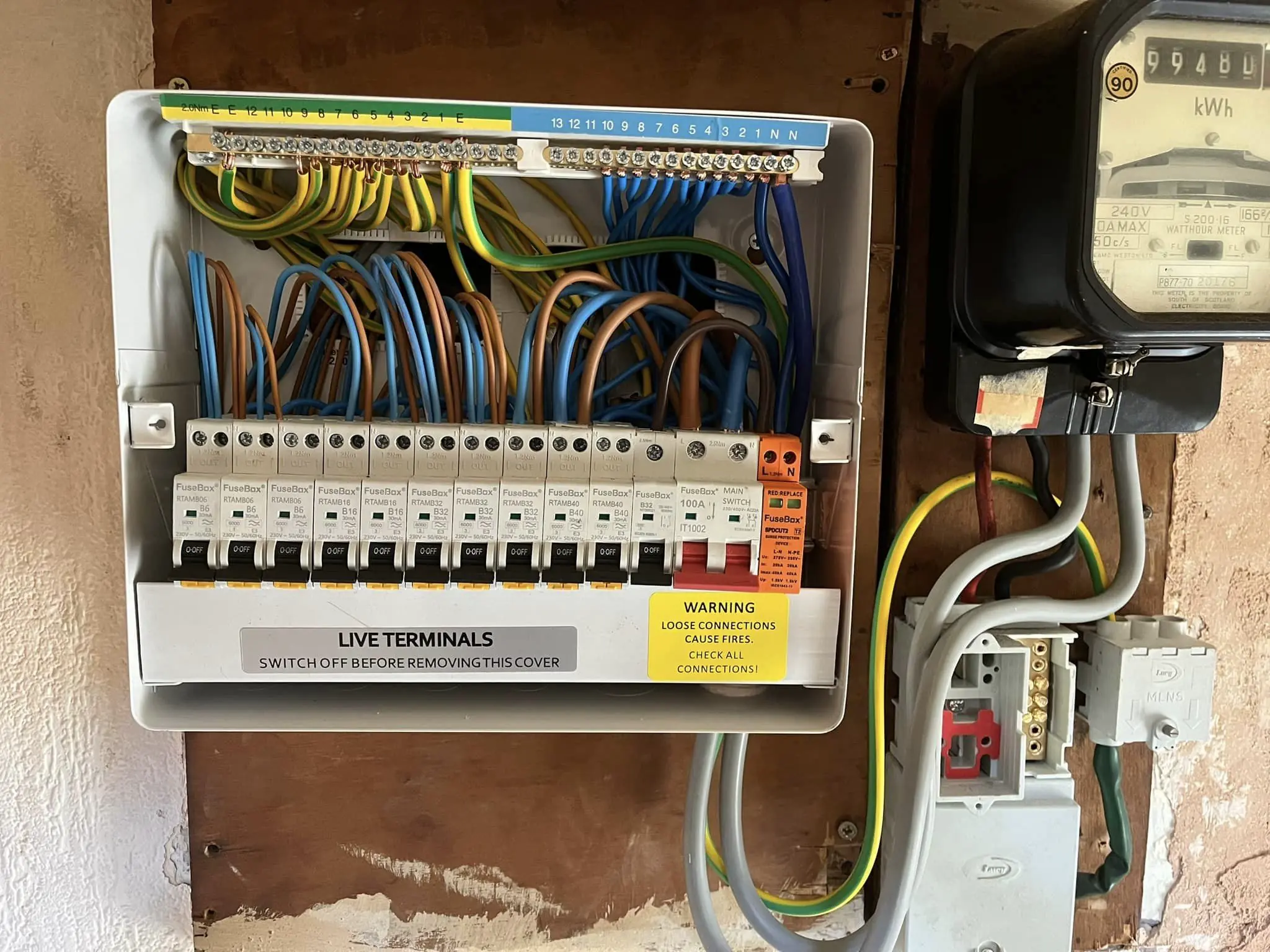
If your consumer unit still uses physical fuse wire rather than modern circuit breakers, that's usually a strong sign the wider installation is overdue an update — this style of fuse box was largely phased out decades ago and lacks the RCD protection built into every modern board.
6. Round-pin sockets or fabric-sheathed cable
Round-pin sockets, or wiring with a fabric or rubber outer sheath rather than modern PVC, are clear indicators of a pre-1970s installation. If you can see either of these anywhere in the property, it's a strong prompt to get the whole installation assessed.
7. The property simply hasn't been rewired in 25–30 years
Even with no obvious symptoms, wiring has a working life — generally reckoned at around 25 to 30 years. If nobody in living memory of the property can tell you when it was last rewired, age alone is a good enough reason to get it checked.
How to actually find out
None of the above tells you for certain whether you need a full rewire, a partial rewire, or nothing more than a repair. The only way to know is an Electrical Installation Condition Report (EICR) — see our full landlord and homeowner guide to EICRs below.
Home & Business Rewiring
Full and partial rewires for homes, flats, offices and shops.
Home & Business Rewiring in Giffnock →Frequently Asked Questions
Does every old fuse box mean I need a rewire?
How long does a full rewire take?
Can a rewire be done in stages?
Is rewiring covered by any certification?
Related Guides

EICR for Landlords in Scotland: The Complete 5-Year Rule Explained
Scottish landlords have a specific legal duty around EICRs that's stricter than a lot of guidance online suggests. Here's what the law actually requires.
Consumer Unit Upgrade Cost Guide: Fuse Box vs Modern Board
Still running an old fuse box? Here's what a modern consumer unit actually costs, what you get for it, and when it's genuinely worth doing.

Electrical First Fix Checklist: What to Plan Before Your Extension or Loft Conversion
First fix is the point of no return before plastering — get it wrong and you're chasing out fresh walls. Here's what to plan in advance.
Need This Sorted, Not Just Explained?
Get a free, no-obligation quote today.