
Blog · Electrical Inspection & Testing
Landlord Electrical Safety in Aberdeen: EICRs, the Repairing Standard and HMOs
Key Takeaways
- Rented homes in Scotland must meet the Repairing Standard, which includes a safe electrical installation and safe appliances provided by the landlord
- A satisfactory EICR is required at least every 5 years, and the report needs to come from a suitably qualified electrician
- Houses in Multiple Occupation (HMOs) are licensed by the council and carry additional safety conditions
- Smoke and heat alarms and carbon monoxide detection are separate duties that sit alongside the electrical report
If you let property in Aberdeen, you are bound by the same Scottish rules as a landlord in Glasgow or Edinburgh. Where Aberdeen differs is the property itself: a lot of older granite tenement flats, student lets near the universities and some HMOs. This guide covers the main electrical points. Rules and guidance are updated from time to time, so always check the current position with the Scottish Government or your local council.
The Repairing Standard in short
The Repairing Standard is the legal minimum condition a private rented home in Scotland must meet. For electrics, it means the installation must be safe, and any electrical appliances the landlord provides must be safe too. Our separate guide on EICRs for Scottish landlords goes into the five-year rule and tenant copies in more detail.
EICRs: what Aberdeen landlords should expect
An Electrical Installation Condition Report (EICR) is an inspection and test of the fixed wiring. Landlords need a satisfactory report at least every five years, and sooner if the electrician recommends it. Any observations are coded by severity, and urgent faults have to be put right so the property meets the standard.
Appliances you provide
Fridges, cookers, washing machines and kettles that you supply as part of the let need to be safe. Portable appliance testing (PAT) is the usual way to evidence that, and it is often done in the same visit as the EICR.
HMOs and student lets
If a property is let to three or more unrelated people it is likely to need an HMO licence from the local authority. HMO licensing comes with its own safety requirements, and councils can ask for up-to-date electrical safety evidence. If you let rooms to students or workers, check the current requirements directly with Aberdeen City Council or Aberdeenshire Council before you apply or renew.
Older flats: what we often find
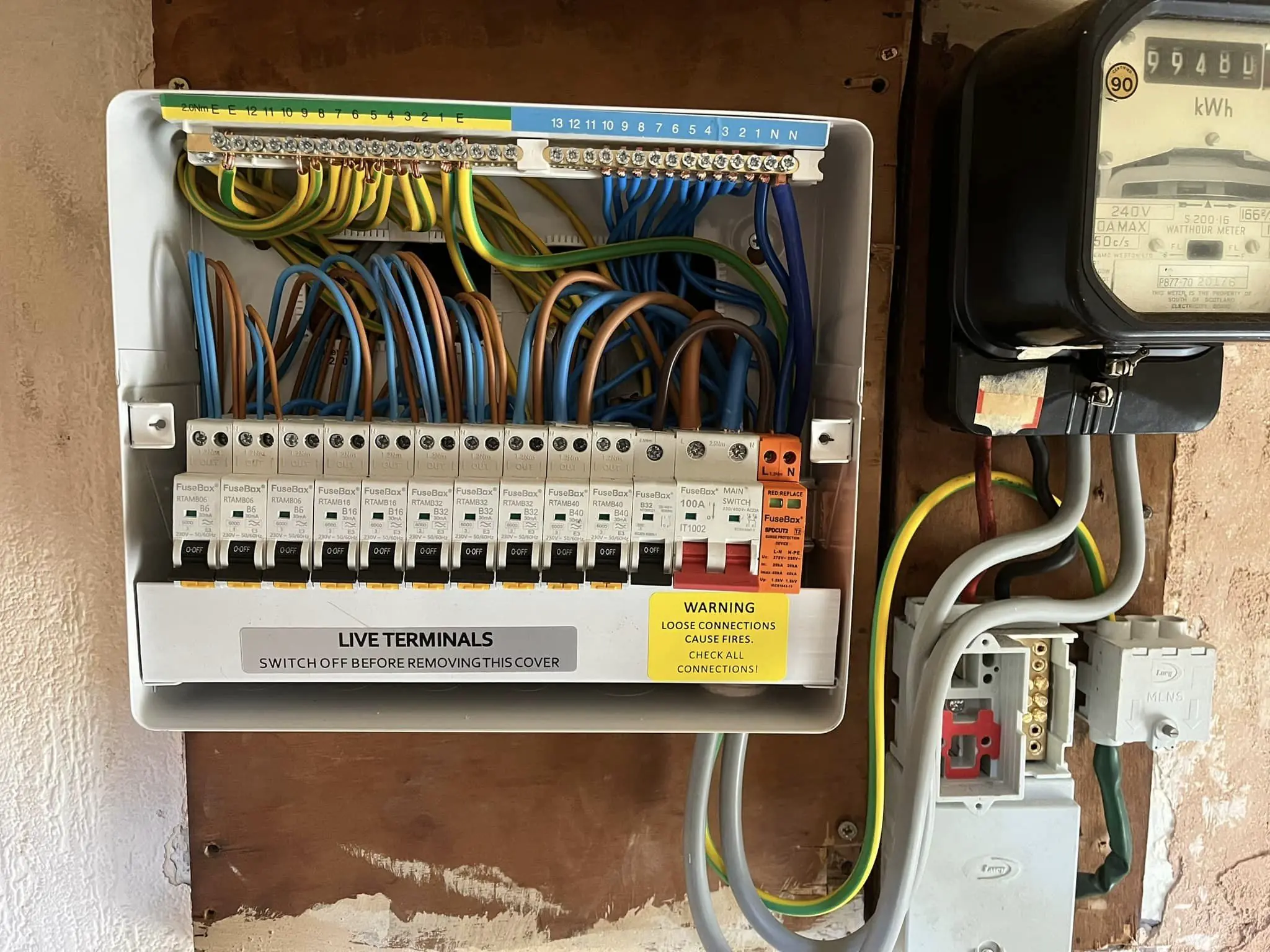
In older flats, the usual findings are old consumer units without RCD protection, a lack of bonding, damaged or ageing cable and DIY alterations by previous owners or tenants. None of these are unusual, but they are exactly the sort of thing an EICR is there to find.
Alarms and carbon monoxide
Scottish rules also cover interlinked smoke alarms, heat alarms and carbon monoxide detection. These are separate duties from the EICR, but they are easy to sort during the same visit, so it is worth arranging them together.
Electrical Inspection & Testing
EICR reports for landlords, homeowners, and commercial properties.
Electrician in Aberdeen →Frequently Asked Questions
How often does an Aberdeen landlord need an EICR?
Does an HMO need a different electrical inspection?
Can you do EICRs for landlords in Aberdeen?
Related Guides
EICR for Landlords in Scotland: The Complete 5-Year Rule Explained
Scottish landlords have a specific legal duty around EICRs that's stricter than a lot of guidance online suggests. Here's what the law actually requires.
What Is an EICR? A Plain-English Guide
EICR gets thrown around a lot without much explanation. Here's what the report actually checks, who legally needs one, and what those C1/C2/C3 codes on the results mean.

How Much Does an EICR Cost in Glasgow?
The honest range for an EICR depends more on property size and circuit count than most people expect. Here's what actually drives the price.
Smoke Alarms, Heat Detectors and Home Safety: What Every Glasgow Homeowner Needs to Know
Scotland's fire alarm law changed in 2022, and a lot of homes still aren't compliant. Here's what's actually required, and where alarms need to go.
Need This Sorted, Not Just Explained?
Get a free, no-obligation quote today.