
Blog · Commercial Installations & Lighting
Electrical Safety in Scottish Weather: Protecting Your Outdoor Electrics Year-Round
Key Takeaways
- Outdoor sockets and fittings need an IP rating of at least IP44, and higher again if they're exposed to direct rain
- All outdoor circuits must be RCD protected, no exceptions
- Freeze-thaw cycles are what actually damages outdoor cable runs, not just cold on its own
- An EV charger's IP rating protects the unit itself, but the cable run into your property still needs to be installed correctly to stay safe
Glasgow doesn't get extreme weather in the dramatic sense, but it gets a lot of weather — persistent rain, regular frost, and enough wind to work moisture into places it shouldn't be. That combination is genuinely harder on outdoor electrics than a drier, more stable climate, which is why outdoor installations here need to be specified properly rather than just fitted and hoped for.
IP ratings aren't optional extras
Every outdoor socket, light fitting, or junction box needs an IP (Ingress Protection) rating suited to where it's actually mounted — IP44 as a minimum for anything outdoors, and higher for fittings exposed to direct, driving rain rather than just damp air. The rating isn't a marketing detail, it's what determines whether water can actually get to the live parts inside.
RCD protection on every outdoor circuit
Outdoor circuits must be RCD protected without exception. Combine damp ground, metal fittings, and anyone standing outside barefoot or in wet shoes, and the margin for error on an unprotected circuit is much smaller than it is indoors.
What freeze-thaw actually does to cables
It's rarely the cold itself that causes damage — it's the repeated cycle of ground moisture freezing, expanding, and thawing around a cable run that gradually works at joints and glands. A cable installed with the right depth, ducting, and gland sealing shrugs this off for years; one installed as a quick surface-mounted job usually doesn't.
EV chargers and outdoor sockets specifically
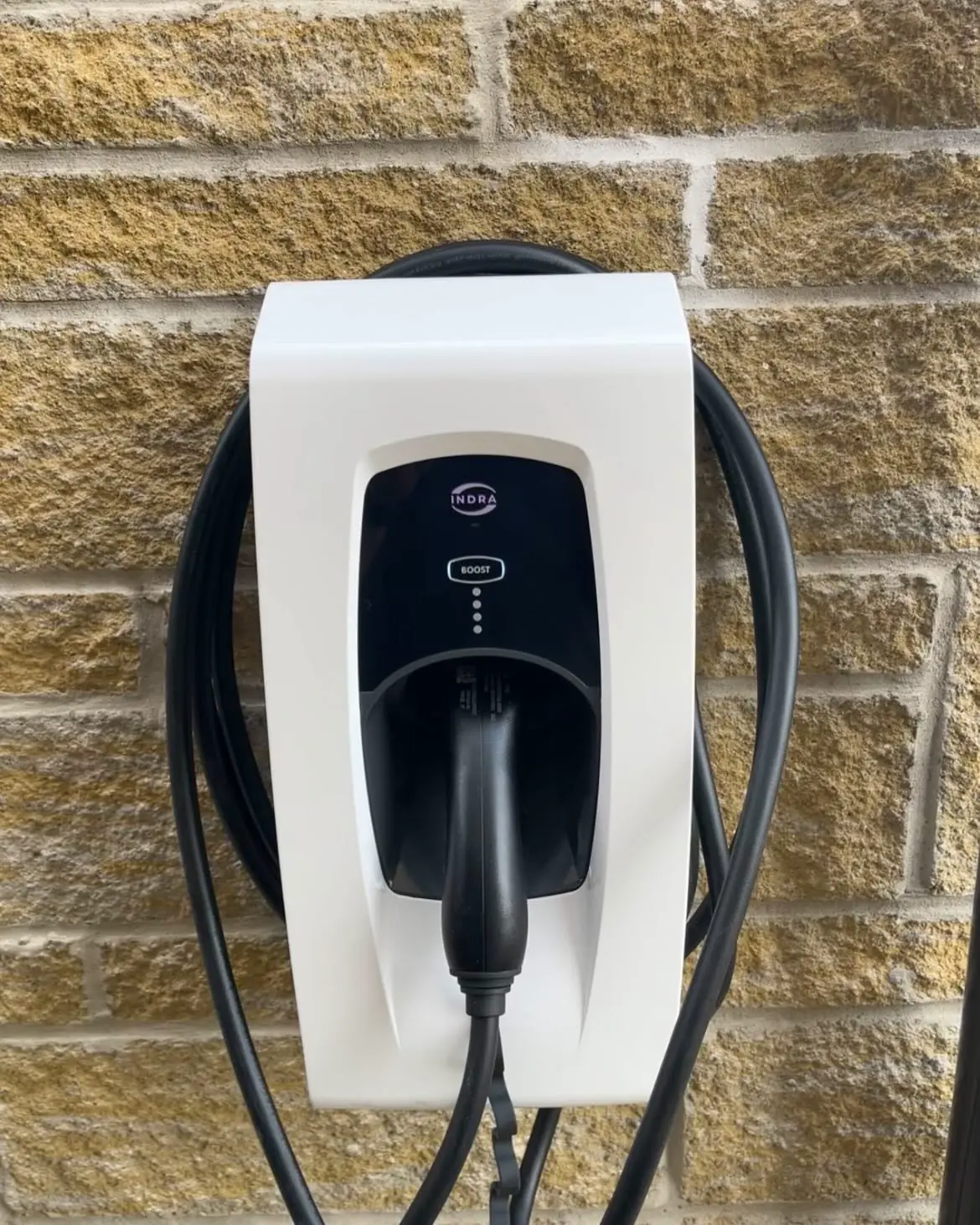
A home EV charger unit itself is built to a high IP rating as standard and copes with Scottish weather without issue. Where problems actually show up is in how the cable run into the property was installed — the isolator, the gland at the wall entry point, and the route the cable takes matter as much as the charger's own rating.
What to check on existing outdoor electrics
If you've got outdoor sockets, lighting, or a charger that predate a recent renovation or that you didn't have installed yourselves, it's worth having them checked rather than assuming they're fine.
- Visible cracking, discolouration, or a loose cover on any outdoor socket or fitting
- A socket or light that's tripped the RCD more than once
- Cable runs that are surface-mounted rather than buried or ducted
- Any outdoor fitting with no visible IP rating marking at all
Commercial Installations & Lighting
Electrical fit-outs and lighting for offices, shops, and units.
Commercial Installations & Lighting in Newton Mearns →Frequently Asked Questions
Do I need a qualified electrician for outdoor lighting, or can I DIY it?
How often should outdoor electrics be checked?
Does an EV charger need any extra weatherproofing in Scotland?
Related Guides
EV Charger Installation Cost Guide: What Glasgow Homeowners Actually Pay
A clear breakdown of what a home EV charger actually costs, what's included in the price, and the three things most likely to push yours higher.
How Much Can Your Business Save by Upgrading to LED Lighting?
LED isn't just a bulb swap — it's usually one of the fastest-paying-back upgrades a commercial property can make. Here's the real numbers.
EICR for Landlords in Scotland: The Complete 5-Year Rule Explained
Scottish landlords have a specific legal duty around EICRs that's stricter than a lot of guidance online suggests. Here's what the law actually requires.
Need This Sorted, Not Just Explained?
Get a free, no-obligation quote today.