
Blog · Electrical Inspection & Testing
The Hidden Dangers of DIY Electrical Work: What Every Homeowner Should Know
Key Takeaways
- A DIY job can look neat and finished on the surface while being genuinely dangerous underneath
- Notifiable electrical work in Scotland must be certified through Building Standards, DIY or not
- Loose connections, not obviously bad wiring, are the most common cause of electrical fires
- An uncertified DIY job can cause real problems when you come to sell or insure the property
Most DIY electrical mistakes don't look like mistakes. They look like a socket that works, a light that switches on, a job that's done — which is exactly what makes DIY electrical work more dangerous than most other DIY, because the failure isn't visible until it's a fire, a shock, or a failed inspection.
It's what you can't see that's the problem
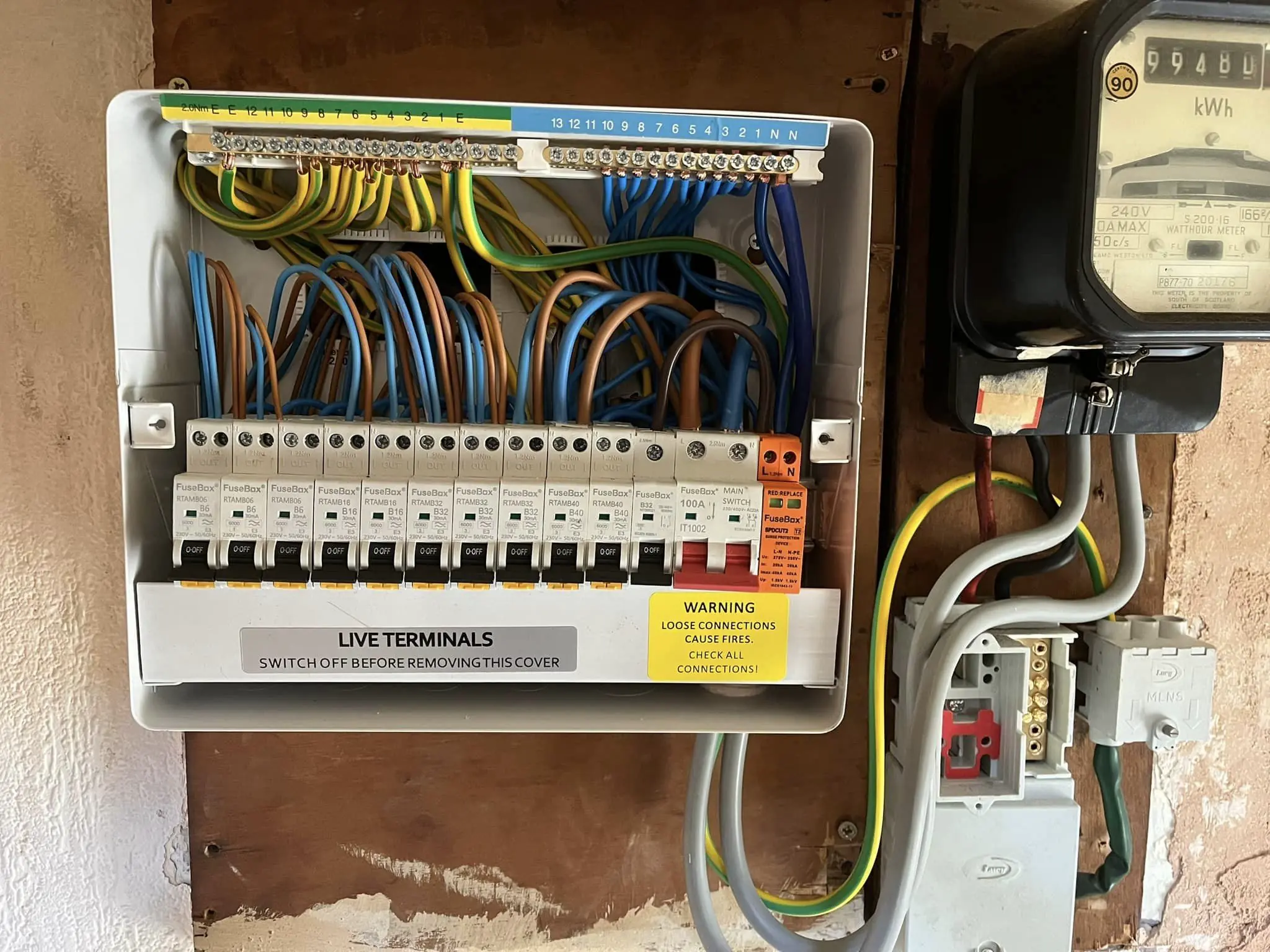
A socket can be wired, screwed to the wall, and working perfectly the day it's fitted, while a connection inside is under-tightened, over-stripped, or on the wrong terminal. None of that shows up in daily use — it shows up months or years later as a loose connection heating up, arcing, or failing outright.
Loose connections are the real fire risk
It's rarely dramatically "wrong" wiring that starts electrical fires — it's ordinary loose connections that heat up under load over time. A professional install is tested under load and re-checked at second fix specifically to catch this; a DIY job usually isn't tested at all beyond "does it turn on."
The legal side: notifiable work in Scotland
Under Scottish Building Standards, certain electrical work is notifiable regardless of who does it — new circuits, consumer unit replacement, and rewiring among them. Notifiable work needs to be certified, either by a registered electrician self-certifying it, or by a separate Building Standards application if you do it yourself. Skipping this isn't just a technicality; it means the work has no official record of being safe.
What it actually costs you later
Uncertified DIY electrical work is one of the most common things that surfaces during a house sale survey or a landlord EICR, and it's a genuinely awkward position to be in — either the work gets redone and certified properly at that point, at your cost and on someone else's timeline, or it becomes a sticking point in the sale itself.
Where the line actually sits
Not everything electrical is off-limits — changing a light bulb or a plug fuse isn't notifiable work. But anything involving new circuits, a consumer unit, or wiring buried in walls sits on the wrong side of that line, and is exactly the kind of work an EICR is designed to catch if it's been done unsafely.
Electrical Inspection & Testing
EICR reports for landlords, homeowners, and commercial properties.
Electrical Inspection & Testing in East Kilbride →Frequently Asked Questions
Is all electrical DIY work illegal in Scotland?
How would I know if previous DIY work in my home is unsafe?
Can uncertified DIY work affect my home insurance?
Related Guides
EICR for Landlords in Scotland: The Complete 5-Year Rule Explained
Scottish landlords have a specific legal duty around EICRs that's stricter than a lot of guidance online suggests. Here's what the law actually requires.

7 Signs Your Glasgow Home Needs Rewired
Flickering lights and a trip now and again could be nothing — or they could be your wiring telling you something. Here's what to actually look for.
Consumer Unit Upgrade Cost Guide: Fuse Box vs Modern Board
Still running an old fuse box? Here's what a modern consumer unit actually costs, what you get for it, and when it's genuinely worth doing.
Need This Sorted, Not Just Explained?
Get a free, no-obligation quote today.