
Blog · Commercial Installations & Lighting
RCBO vs Dual RCD Distribution Boards: Which Protection Does Your Business Need?
Key Takeaways
- A dual RCD board splits circuits across two RCDs, so a fault only affects half the circuits rather than all of them
- An RCBO board gives every individual circuit its own dedicated protection, so a fault only trips that one circuit
- RCBO boards cost more upfront but minimise disruption significantly, which matters more for some businesses than others
- The right choice depends on how disruptive losing multiple circuits at once would actually be for your business
This is a genuinely practical decision, not just a technical spec choice - it determines how much of your business goes dark when one circuit develops a fault. Here's what actually separates the two options.
How a dual RCD board works
A dual RCD board splits the circuits in the building across two separate RCDs, typically alternating so related circuits aren't all on the same one. If a fault occurs on any circuit protected by one RCD, that whole RCD trips, taking out every circuit connected to it - not just the faulty one.
How an RCBO board works
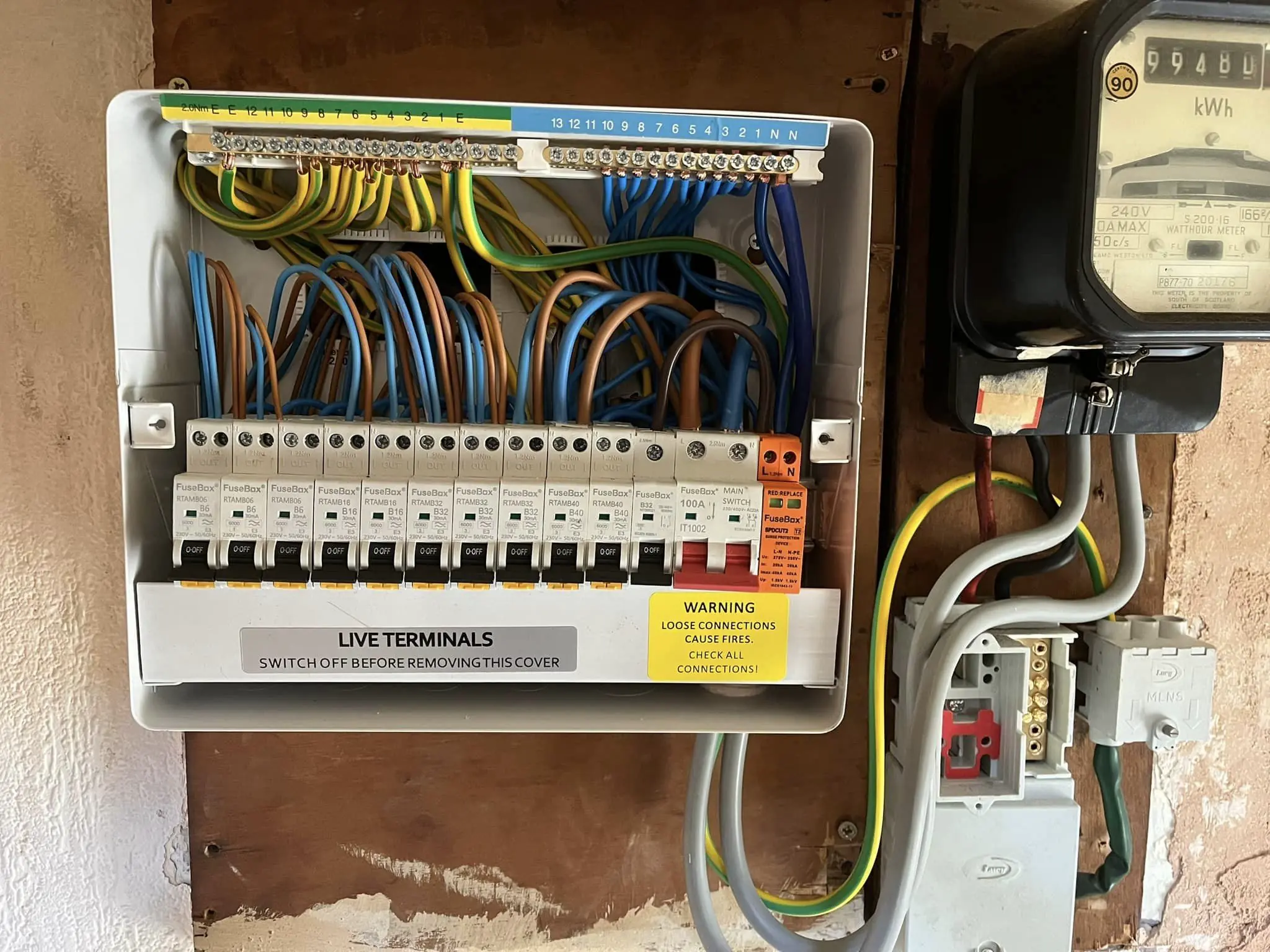
An RCBO board gives every individual circuit its own combined circuit breaker and RCD. A fault on one circuit trips only that circuit, leaving every other circuit in the building completely unaffected. This is the more targeted, less disruptive option, but comes at a higher cost per circuit than a shared dual RCD arrangement.
Why this matters more for some businesses than others
For a business where losing half the building's power - lighting, tills, refrigeration, whatever happens to share that RCD - is a genuine operational problem, the extra cost of RCBO protection on every circuit is usually worth it. For a smaller unit with fewer critical systems, a well-designed dual RCD board is often a perfectly reasonable, more economical choice.
Cost versus disruption trade-off
RCBO boards cost more upfront per circuit than dual RCD boards, since each circuit needs its own RCBO device rather than sharing one RCD across several circuits. The right way to think about this isn't which is objectively "better," but which cost the disruption of losing multiple circuits at once genuinely represents for your specific business.
What we actually recommend
We look at what's actually connected to each circuit - refrigeration, tills, critical lighting, general sockets - and recommend based on what genuinely can't afford to go down together, rather than defaulting to the most expensive option regardless of need.
Commercial Installations & Lighting
Electrical fit-outs and lighting for offices, shops, and units.
Commercial Installations & Lighting in East Kilbride →Frequently Asked Questions
Is RCBO protection always the better choice?
Can an existing dual RCD board be upgraded to RCBO later?
Does RCBO protection cost significantly more overall?
Related Guides
Distribution Board Upgrades: The Complete Guide for Glasgow Businesses
An outdated or under-protected distribution board is a genuine liability for a business, not just an aging fixture. Here's when to prioritise an upgrade.

Three-Phase Distribution Boards: What Glasgow Businesses Need to Know
Three-phase power isn't needed for most small businesses, but it's essential for certain equipment. Here's how to know which category you're in.
Consumer Unit Upgrade Cost Guide: Fuse Box vs Modern Board
Still running an old fuse box? Here's what a modern consumer unit actually costs, what you get for it, and when it's genuinely worth doing.
Need This Sorted, Not Just Explained?
Get a free, no-obligation quote today.