
Blog · Commercial Installations & Lighting
Distribution Board Upgrades: The Complete Guide for Glasgow Businesses
Key Takeaways
- Older metal-clad or rewireable-fuse distribution boards no longer meet current wiring regulations for most commercial premises
- RCD and RCBO protection significantly reduce the risk of both electric shock and electrical fire in a commercial setting
- An outdated board is one of the most common findings on a commercial EICR
- Upgrades can usually be phased to minimise disruption to a trading business
A distribution board that's been fine for years can quietly become a genuine liability as a business grows, adds equipment, or simply ages past what current regulations expect. Here's what actually determines whether an upgrade is overdue.
Signs a distribution board is overdue for upgrade
Older rewireable fuse boards, boards without RCD protection on final circuits, or plastic-enclosed boards installed before current fire safety standards are all common findings that flag a board as due for replacement. Frequent nuisance tripping, visible scorching or discolouration, or simply not knowing what protection is actually fitted are all reasons to have it properly assessed.
What modern protection actually adds
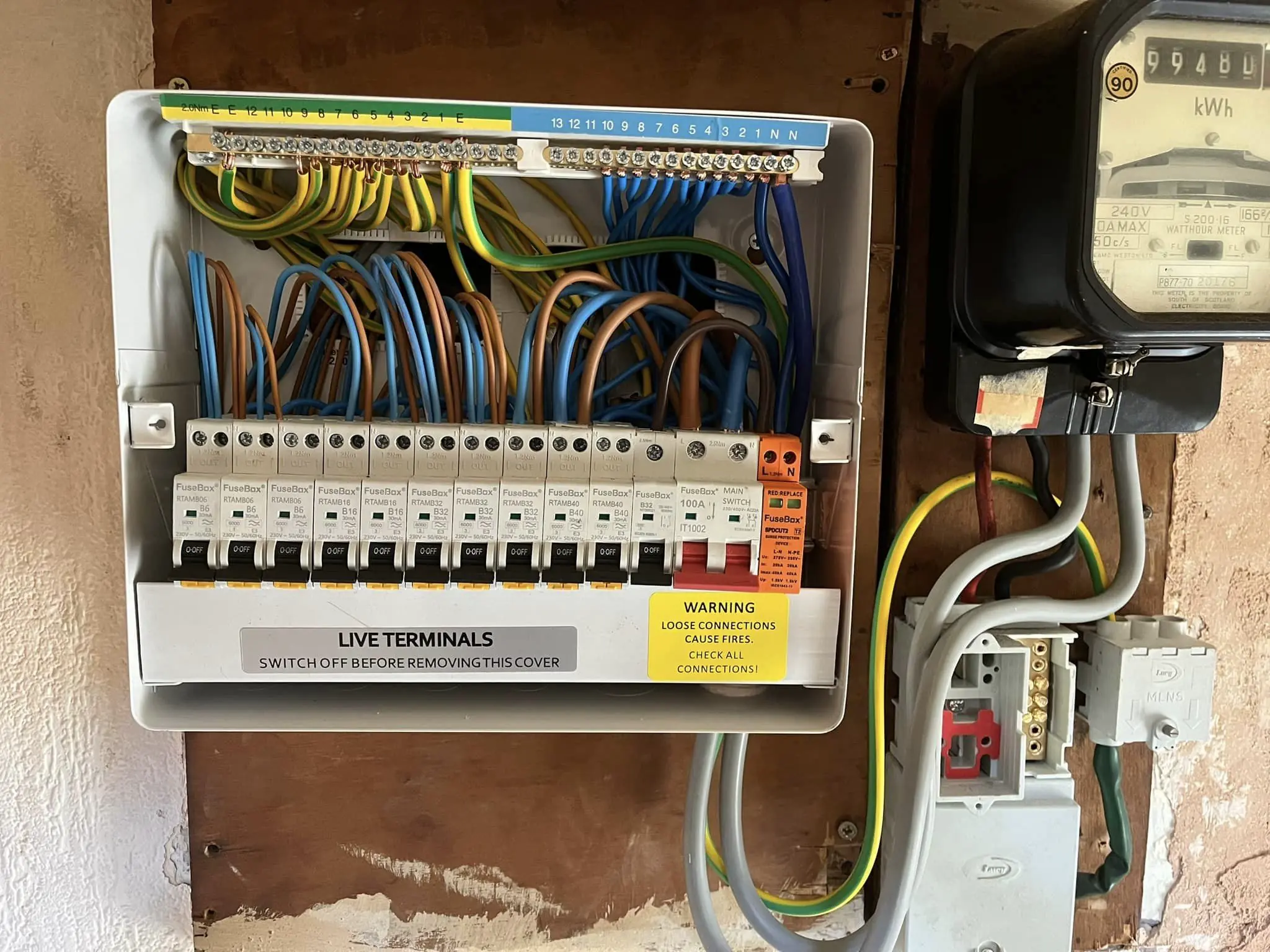
Current distribution boards use RCBOs (combined circuit breaker and RCD protection) on individual circuits rather than a single RCD covering multiple circuits. This means a fault on one circuit trips only that circuit, not everything sharing the same RCD - a real practical difference for a business where an unrelated area losing power because of one faulty piece of equipment is a genuine disruption.
Metal enclosures and current fire safety standards
Current wiring regulations require distribution boards in most commercial and domestic settings to be housed in a non-combustible enclosure, typically metal, rather than the plastic enclosures common in older installations. This is one of the most frequent findings on commercial EICRs specifically because it was a genuine standards change, not because older plastic boards were installed incorrectly for their time.
Phasing an upgrade around a trading business
A distribution board upgrade doesn't have to mean the whole business goes without power for a day. Work can usually be phased - isolating and working on sections at a time, or scheduling the change for evenings or a quieter trading period - so the business keeps functioning while the upgrade happens.
Why this shows up on EICRs so often
Outdated distribution boards are consistently one of the most common findings on commercial EICRs, precisely because a board can keep working perfectly well for the equipment plugged into it while genuinely falling short of current protection and enclosure standards. An EICR is what actually catches this, rather than relying on the board simply appearing to function.
Commercial Installations & Lighting
Electrical fit-outs and lighting for offices, shops, and units.
Commercial Installations & Lighting in Bearsden →Frequently Asked Questions
Does my distribution board need replacing just because it's old?
Can an upgrade be done without closing the business?
Will a distribution board upgrade come up on my next EICR anyway?
Related Guides

Three-Phase Distribution Boards: What Glasgow Businesses Need to Know
Three-phase power isn't needed for most small businesses, but it's essential for certain equipment. Here's how to know which category you're in.
RCBO vs Dual RCD Distribution Boards: Which Protection Does Your Business Need?
Choosing between a dual RCD board and a full RCBO board affects how much of your business loses power when one circuit faults. Here's the real difference.

EICR for Landlords in Scotland: The Complete 5-Year Rule Explained
Scottish landlords have a specific legal duty around EICRs that's stricter than a lot of guidance online suggests. Here's what the law actually requires.
Need This Sorted, Not Just Explained?
Get a free, no-obligation quote today.