
Key Takeaways
- An RCD detects tiny imbalances in current and cuts power fast enough to prevent a fatal shock
- It's a different kind of protection to a fuse or MCB, which respond to overload and short circuits, not shock risk
- Many older fuse boxes have no RCD protection at all, or only cover some circuits
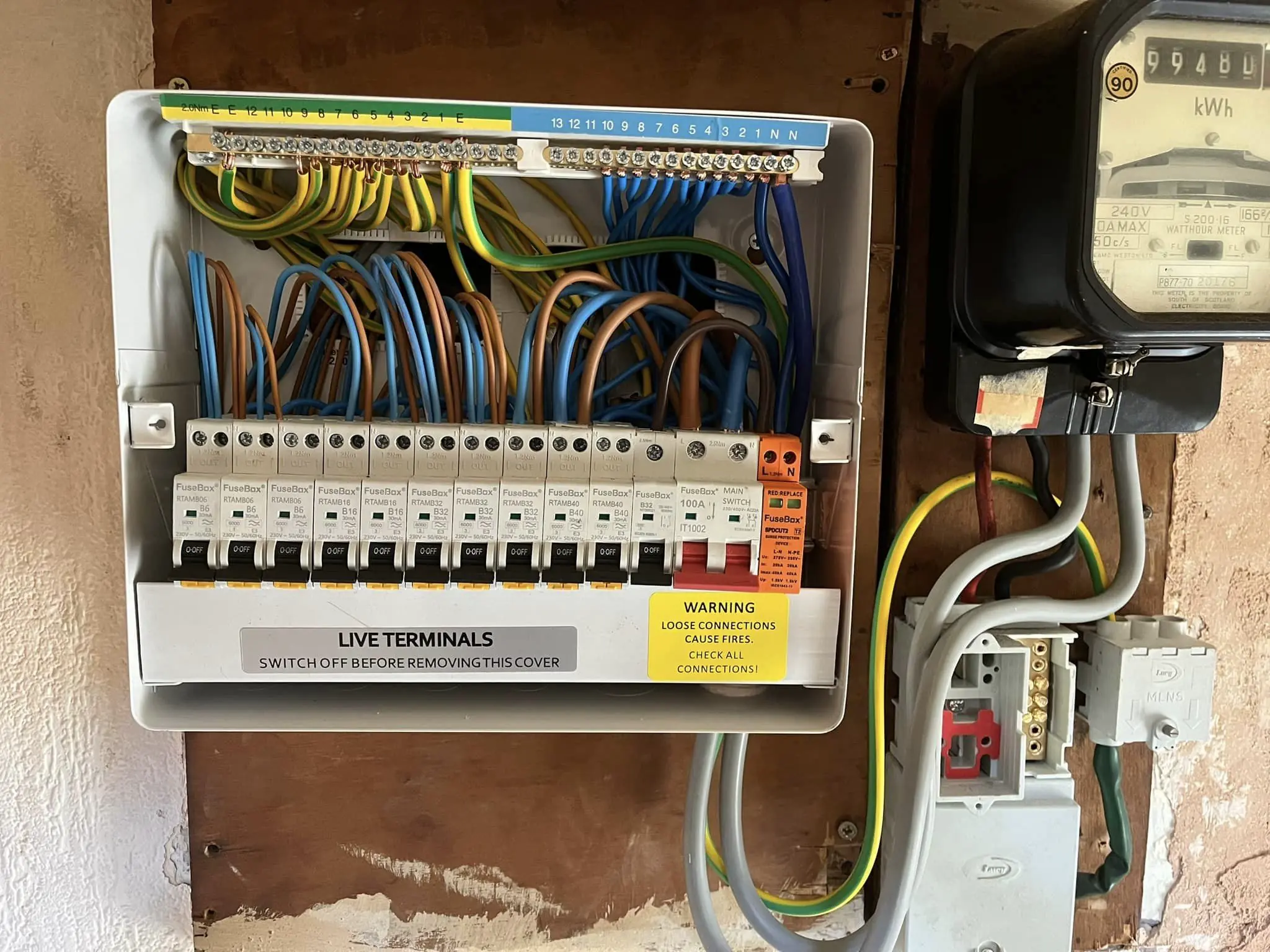
- Modern consumer units fit RCD protection — usually via RCBOs — on every circuit individually
RCD stands for Residual Current Device, and it's arguably the single most important piece of safety equipment in a modern consumer unit — yet most people couldn't explain what it actually does if asked.
Here's the plain version, and how to check whether your home actually has it.
What an RCD actually detects
An RCD constantly monitors the current flowing out through the live wire against the current flowing back through the neutral. In a healthy circuit, those two figures match. If some current is leaking to earth — through a person, water, or damaged cable — there's an imbalance, and the RCD detects it.
When it detects a leak above a set threshold, typically 30mA for personal protection, it disconnects the circuit in under 40 milliseconds. That speed is what makes the difference between a shock and a fatal one.
How this is different from a fuse or MCB
A standard fuse or MCB (miniature circuit breaker) protects against overload and short circuits — too much current flowing through the wire itself, which risks fire. It has no way of detecting current leaking to earth through a person, which is a completely different failure mode.
That's why a property can have fuses or MCBs that work perfectly and still offer no protection against electric shock — the two systems are solving different problems.
How to tell if your home has RCD protection
Open your consumer unit and look for a device labelled RCD, or individual breakers labelled RCBO — these combine both overload and RCD protection in one unit per circuit. If you see only rows of plain MCBs, or worse, an old fuse box with rewireable fuses, there's likely no RCD protection at all.
Why older homes are often missing it
RCD protection wasn't a standard requirement for most circuits until relatively recently in UK wiring regulations. Plenty of homes with wiring that's otherwise sound simply predate the requirement — which is usually the actual reason an older consumer unit gets flagged on an inspection, rather than the wiring itself being faulty.
Consumer Unit Upgrades
Modern, RCD-protected consumer units to replace old fuse boards.
Consumer Unit Upgrades in Bearsden →Frequently Asked Questions
Can I add an RCD without a full consumer unit upgrade?
Why does my RCD trip when I plug something in?
Is one RCD enough for the whole house?
Do I need RCD protection to sell my house?
Related Guides
What Is an RCBO? RCD vs RCBO Explained
RCBO is one of the more confusing acronyms in home electrics — mostly because it's doing the job of two older devices at once. Here's what it means in practice.

What Is Surge Protection, and Do You Actually Need It?
Surge protection gets offered on almost every consumer unit quote now. Here's what it actually protects against, and how to judge whether it's worth it for your home.
Consumer Unit Upgrade Cost Guide: Fuse Box vs Modern Board
Still running an old fuse box? Here's what a modern consumer unit actually costs, what you get for it, and when it's genuinely worth doing.
Need This Sorted, Not Just Explained?
Get a free, no-obligation quote today.