
Blog · Electrical Inspection & Testing
Electrical Safety for Rural Aberdeenshire Properties: Earthing, Storms and Outbuildings
Key Takeaways
- Rural supplies can use different earthing arrangements, and the installation needs to match
- Outbuildings, barns and garden supplies need proper protection, including RCDs, especially where there is damp or livestock
- Storms and overhead lines make surge protection and a tested installation worthwhile
- An inspection and test (EICR) is the best way to find out the true condition of an older rural property
Out in Aberdeenshire, electrical installations can be a long way from the main road, a long way from the nearest substation and a long way from a quick fix. A little preparation makes a difference.
Earthing on rural supplies
Not every property gets an earth connection from the supplier. Some rural homes use an earth electrode, usually a rod in the ground, which is known as a TT system. These need RCD protection and regular testing, because the ground itself can change with the seasons. If you are not sure what type of earthing your property has, an electrical inspection will tell you.
RCD protection
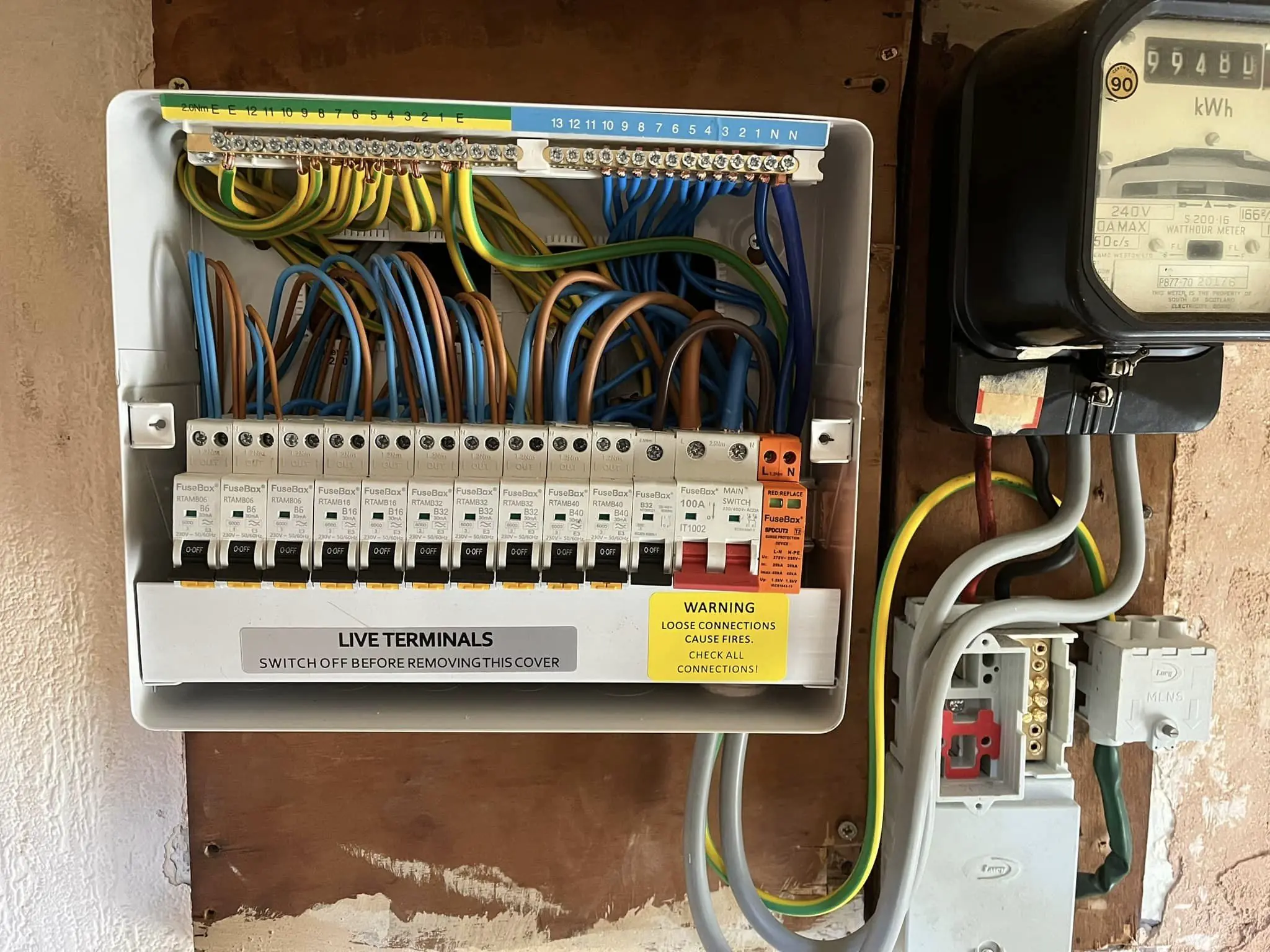
Residual current devices cut the power very quickly if a fault sends current where it should not go. They matter everywhere, but particularly in damp, dusty or animal-housing areas such as barns and workshops. If your consumer unit has no RCD protection, upgrading it is one of the most worthwhile safety improvements for any older property.
Outbuildings, sheds and barns
Supplies to outbuildings need to be correctly protected, armoured or otherwise suitably installed, and isolated from the main building where appropriate. Farm and agricultural buildings have additional rules in BS 7671 because of damp, animals and corrosive conditions. If you are running a supply to a shed, garage or workshop, it is a job for a qualified electrician.
Storms, overhead lines and power cuts
Storms bring down overhead lines and can cause surges as power is lost and restored. Surge protection at the consumer unit helps protect sensitive electronics. If you rely on a generator, it should be connected through a properly installed changeover arrangement so it cannot back-feed the network. Report network faults to your distribution network operator, not to an electrician.
How often should a rural property be tested?
Landlords need an EICR at least every five years. Owner-occupiers are not legally required to have one, but older properties, farms and anything with outbuildings benefit from an inspection every ten years or when buying a house. Our guide on how long an EICR lasts has the detail.
Getting help in Aberdeenshire
We are based in Oldmeldrum and cover villages and farms across Aberdeenshire. Contact us if you would like an inspection, a consumer unit upgrade or advice on a new outbuilding supply.
Electrical Inspection & Testing
EICR reports for landlords, homeowners, and commercial properties.
Electrician in Methlick →Frequently Asked Questions
What is a TT earthing system?
Do barns and outbuildings need an EICR?
Who do I call in a power cut?
Related Guides
What Is an EICR? A Plain-English Guide
EICR gets thrown around a lot without much explanation. Here's what the report actually checks, who legally needs one, and what those C1/C2/C3 codes on the results mean.
What Is an RCD and Why Does It Matter?
RCD gets mentioned on every electrical report but rarely explained. Here's what it actually does, how it differs from a fuse, and why it's the single biggest safety upgrade in most older homes.
What Is Surge Protection, and Do You Actually Need It?
Surge protection gets offered on almost every consumer unit quote now. Here's what it actually protects against, and how to judge whether it's worth it for your home.
Electrical Safety in Scottish Weather: Protecting Your Outdoor Electrics Year-Round
Scotland's weather is genuinely harder on outdoor electrics than most of the UK. Here's what protects them properly, and what's just a quick fix.
Need This Sorted, Not Just Explained?
Get a free, no-obligation quote today.